

You create a flexible schedule by keeping the lesson’s structure intact while adapting its timing—choosing your own start day, shortening activities to fit a timer, and spreading a week’s material across fewer or more sessions. The goal isn’t to rush through every item on the page; it’s to keep your child engaged and moving forward at a pace that builds real reading skill. Below is how each part of a lesson flexes, drawn from our Dyslexia Intervention Curriculum.
Why does a flexible schedule matter for dyslexia?
Teaching a child with dyslexia at home can be both rewarding and demanding, and a rigid plan rarely survives a real family week. A flexible schedule is one that preserves the order and intent of each lesson while letting you adjust the pace and length to match your child’s needs and your calendar. When you give yourself permission to shorten an activity or shift a lesson day, you protect the two things that matter most: consistency and engagement. A child who finishes a focused, calmer 30-minute session learns more than one who pushes through an exhausting hour.
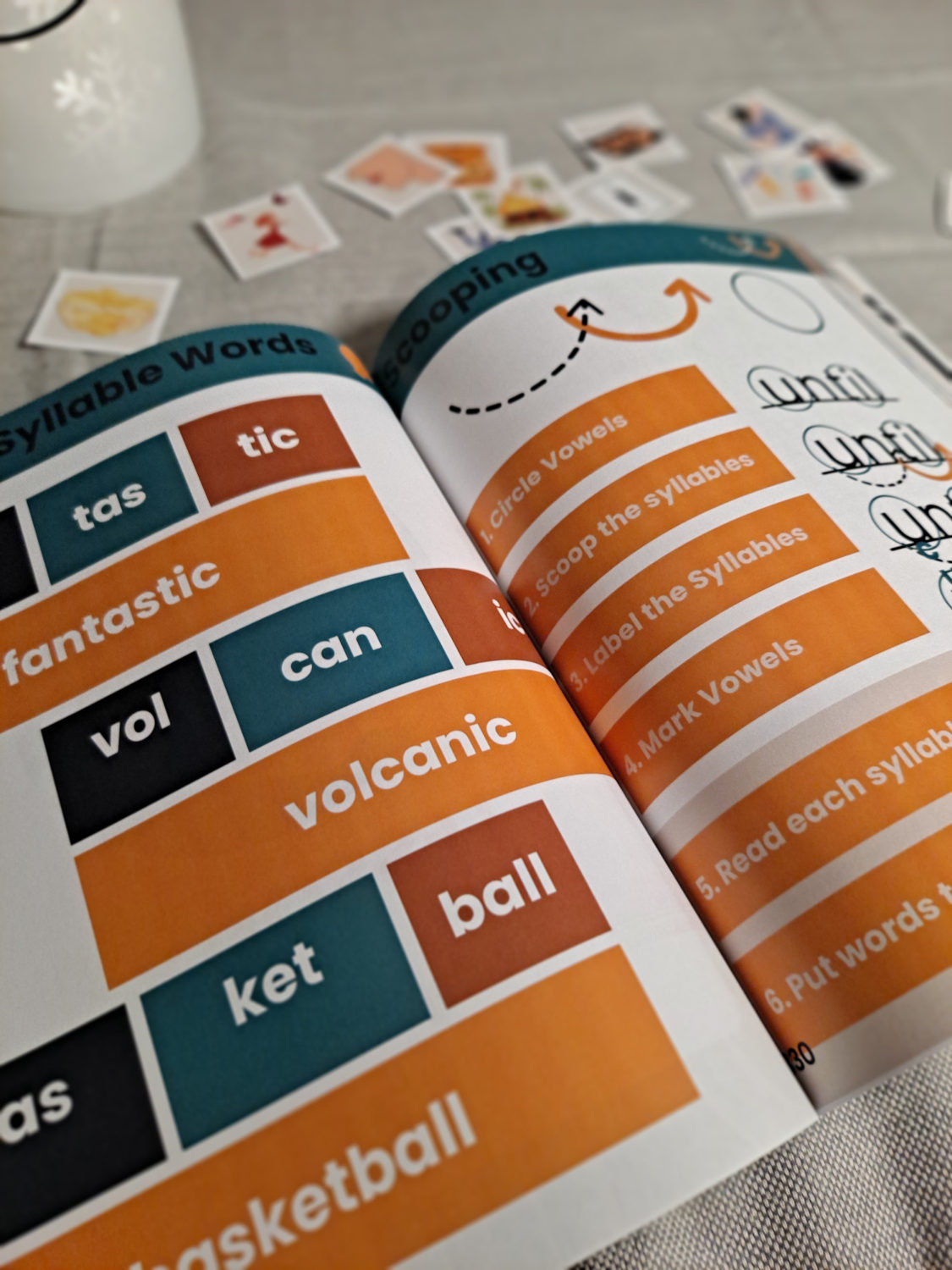
Every activity in our program comes with a suggested timeframe, but covering all of the sounds, words, or sentences in a section isn’t required. Aiming for “all of it” every single day is what burns families out. Aiming for “the right amount for today” is what keeps them going.
How do I structure each lesson?
Each lesson is built from short, predictable activities that move from sounds to words to connected reading and writing. The structure stays the same week to week, which is what makes it possible to flex the timing without losing the thread. A typical Monday lesson includes short vowel posters, sound cards, a phonemic awareness drill, introducing a concept, lesson activities, word reading, sentence reading, quick drill encoding, spelling, writing words, editing, and reading a story with comprehension.
The key mindset: each block has a target time, and when the timer is up, you move on. You are not failing the lesson by leaving words on the page—you’re pacing it. As your child masters more sounds, the same blocks naturally cover more ground in the same number of minutes.
How long should each activity take?
Here are the suggested timeframes for a Monday lesson, along with how to trim each one when time is tight:
- Short Vowel Posters — 2–3 minutes. The first time may take longer; once the routine is familiar, 2–3 minutes is plenty.
- Sound Cards — 2–3 minutes. Set a 3-minute timer and see how many cards you cover. Early on you won’t get to all of them, and that’s fine—add more as your child masters sounds.
- Phonemic Awareness Drill — 2–3 minutes. In the first week, practice with just a few words. Speed improves with consistency.
- Introducing a Concept — 3–5 minutes. This is foundational and should not be skipped—the whole week’s work builds on it.
- Lesson Activities — 3–5 minutes. If time is limited, omit some practice words once your child clearly grasps the concept.
- Word Reading — 3–5 minutes. Do the first column, then some nonsense words; include a few nonsense words each time to sharpen decoding.
- Sentence Reading — 3–5 minutes. Each section has 8 sentences—pick a few if you’re short on time.
- Quick Drill Encoding — 2–3 minutes. Focus on finding sounds on the tile mat; cover a portion now, finish faster in later weeks.
- Spelling — 2–3 minutes. Start with a few words on the tile mat and expand as the routine becomes familiar.
- Writing Words — 8–10 minutes. Early on, spell 3 or 4 words and write 2 or 3 sentences; build up over time.
- Editing — 3–5 minutes. Begin with one sentence using the CHOPS method; add more sentences as it becomes routine.
- Read a Story & Comprehension — 10–15 minutes. Prioritize this every week—it ties the new concepts together and shouldn’t be abbreviated.
Notice that the times are generous on purpose. A full first week often runs long simply because the routines are new. By a few weeks in, the same lesson moves faster, and you’ll find yourself covering more cards, more words, and more sentences in the same windows.
How do I customize the schedule to fit my week?
The lesson day is labeled “Monday,” but your real week may not cooperate. Adapt the structure to your rhythm:
- Choose your own start day. If Monday is taken up by piano or another commitment, start on Wednesday—or whatever day fits. The label is a suggestion, not a rule.
- Use a 3-day week when needed. A full week is ideally 5 days, but a 3-day plan works. Keep your Monday session as-is, then combine Tuesday and Wednesday into one focused 60-minute day, and Thursday and Friday into another.
- Stretch one week into two. Each week holds a lot of material. If you need a slower pace, spread a single week across two by halving the word and sentence lists. This is especially helpful for children who need extra practice to master skills and build the neural pathways reading requires—repeating stories and sorting activities reinforces the learning.
For more on protecting your child’s energy and your own, see finding balance in your child’s learning journey and our broader guidance on support at home. If you’re just getting started teaching at home, our step-by-step guide to teaching reading at home walks through the foundations.
Which activities should I never skip?
Flexibility has limits, and two activities anchor every lesson. Introducing a Concept (3–5 minutes) is where the new skill is taught—skip it and the rest of the week has nothing to build on. Read a Story & Comprehension (10–15 minutes) is where everything comes together: your child applies the new concept in real reading, and you get a window into what landed and what needs another pass. When time is short, trim the drills and practice lists first; keep these two intact.
The companion Teacher Guide and Student Workbook walk through each of these activities in order, and you can find the full program in our workbook on Amazon. With a structure you can lean on and the freedom to flex the pace, a flexible schedule turns daily lessons from a source of stress into a steady, sustainable routine.
Frequently Asked Questions
Do I have to finish every word and sentence in a lesson?
No. Each activity has a suggested timeframe, and it's fine to cover only part of the sounds, words, or sentences. Set a timer, do what you can in the time, and move on—your child will cover more ground as they master more sounds.
Can I run the program on fewer than 5 days a week?
Yes. A 3-day week works well: keep your first lesson day as-is, then combine the next two days into one focused 60-minute session and the final two days into another. The structure stays intact while the schedule fits your week.
What if my child needs more time on each week's material?
You can stretch one week's content across two weeks by halving the word and sentence lists. Repeating stories and sorting activities gives children who need extra practice more time to master skills and build the neural pathways reading requires.
Which activities should I prioritize when time is short?
Always protect Introducing a Concept and Read a Story & Comprehension. The first teaches the new skill the whole week builds on; the second ties everything together. Trim drills and practice word lists before touching these two.
Does the lesson have to start on Monday?
No. Monday is just a label. Pick whatever day fits your family's rhythm—if Monday is busy, start on Wednesday or any other day. The point is a consistent, repeatable routine, not a specific weekday.