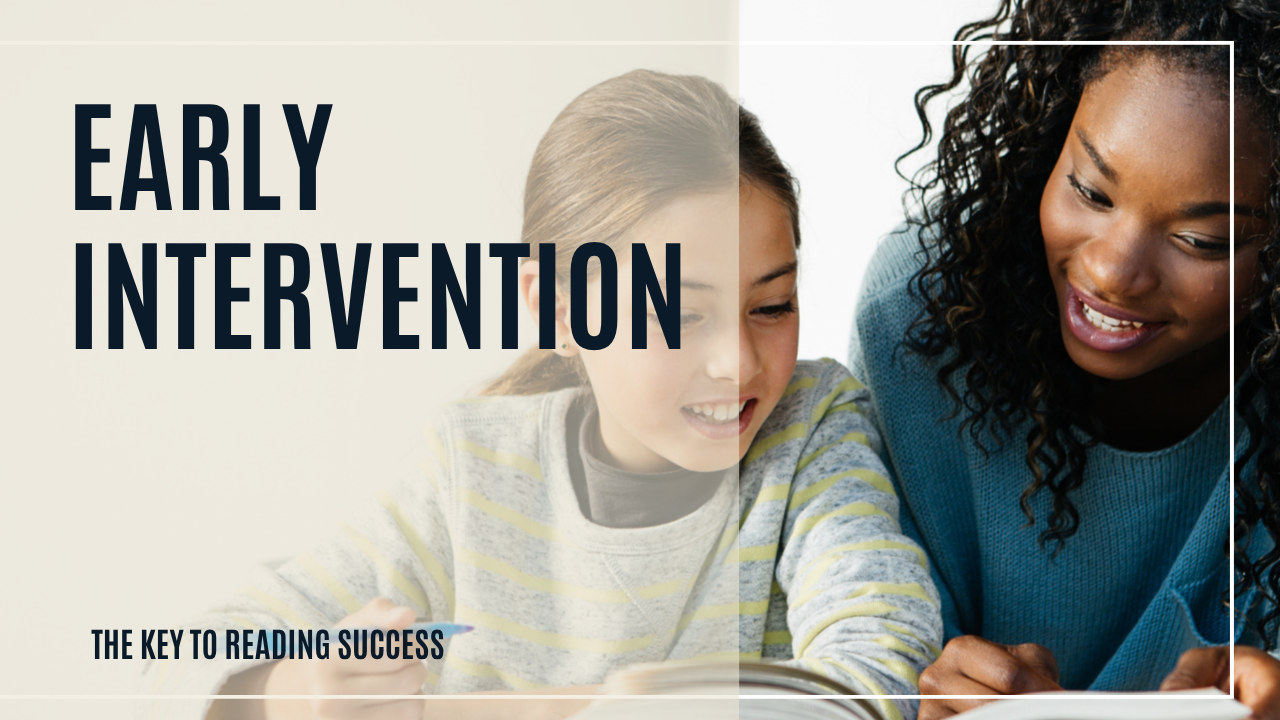
When it comes to dyslexia, early intervention is the key to reading success. Dyslexia is a neurodevelopmental difference, and building the neural pathways to read takes time and consistent, structured practice. Catching it early and starting the right kind of instruction gives a child the best possible foundation — academically and emotionally.
Why does early intervention matter so much?
Identifying dyslexia early is a genuine gift to your child. It allows targeted support before gaps widen and before years of struggle chip away at confidence. Early detection lets educators and specialists put evidence-based strategies in place that address a child’s specific challenges — and it sets realistic expectations so you can be patient with progress that is real but gradual.
The role of explicit, systematic phonics
Decades of research are clear: explicit, systematic phonics instruction can teach virtually all children to read. Explicit means the rules are taught directly, broken into small, graspable chunks. Systematic means reading is taught in a fixed, logical order. Children with dyslexia especially need the code taught in small steps, in a sensible sequence, with plenty of repetition for mastery.
Key components of an effective reading program
Whatever program you choose, look for these elements:
- Phonics — direct teaching of letter-sound relationships.
- Explicit instruction — rules taught clearly, not left to discovery.
- Systematic learning — a logical, cumulative sequence.
- Repeated practice — repetition to build mastery and lasting recall.
- Multisensory methods — sight, sound, and touch together to strengthen memory.
The Orton-Gillingham method
The best-known approach that checks all of these boxes is the Orton-Gillingham (OG) method. OG teaches decoding and spelling explicitly — letter sounds, phonics, and language rules — in a deliberate order that builds on what a child already knows. It’s also multisensory: students see the print, hear the words, and tap or trace, repeating learning through several senses. That repetition builds the stronger neural pathways that make reading stick. For a home-friendly intro, see Orton-Gillingham at home.
Choosing the right intervention materials
Look for a science-based, structured, multisensory, Orton-Gillingham–style curriculum. Our Dyslexia Intervention Curriculum is built exactly that way and designed for families — equipping parents with the knowledge, strategies, and resources to help their child read, write, and spell (the workbook is on Amazon). Once you have the right materials, the most important ingredient is simply starting — and staying consistent.

Frequently Asked Questions
Why is early intervention important for dyslexia?
Early intervention lets you address reading difficulties before gaps widen and confidence erodes. The brain is especially responsive to structured reading instruction in the early years, so starting early produces the biggest gains.
At what age should dyslexia intervention start?
As soon as you notice persistent difficulty — signs can appear in preschool, and intervention is highly effective in kindergarten and first grade. The earlier the better, but help at any age makes a difference.
What kind of reading program works best for dyslexia?
A structured, explicit, systematic, multisensory program — typically based on the Orton-Gillingham approach — is the gold standard for teaching children with dyslexia to read.
Is it too late to help an older child with dyslexia?
No. Early is best, but it is never too late. Older children and even adults make real progress with the right structured, multisensory instruction.
What is the Orton-Gillingham method?
It is a structured, explicit, multisensory approach to teaching reading and spelling that breaks language into small steps and teaches them in a logical, cumulative order with lots of repetition — ideal for dyslexic learners.