

To support your dyslexic child, partner with the school as a true member of the team—share your child’s diagnosis, strengths, and challenges, then meet regularly to track progress and adjust the plan. Schools and families do their best work for a struggling reader when they communicate openly and pull in the same direction. The steps below show you how to build that partnership and keep it working over time.
Why does collaboration with schools matter so much?
Collaboration with schools and teachers is crucial for ensuring your child’s success in the educational system. Your child spends most of their day at school, so the adults there have an enormous influence on how reading instruction goes—and on how your child feels about learning. When you and the school work as partners rather than adversaries, you create a consistent, supportive environment where your child knows that everyone is on their side.
Collaboration means a two-way partnership in which parents and educators share information, set goals together, and adjust the plan based on real progress. That partnership starts with you sharing essential information about your child’s dyslexia diagnosis, strengths, and challenges, and it continues every time you check in on how things are going.
How do I open communication with my child’s teachers?
Open lines of communication are the foundation of every successful school partnership. The goal is to make sure teachers understand your child as a learner—not just a name on a roster—and that you stay informed about what’s happening in the classroom. Schedule meetings with the people who shape your child’s day, and treat them as ongoing conversations rather than one-time events.
- Regularly schedule meetings with teachers, administrators, and special education professionals.
- Share a short, written summary of your child’s diagnosis, strengths, and challenges so it’s easy to reference.
- Use each meeting to discuss progress and raise any concerns or adjustments needed in the educational plan.
- Keep your tone collaborative—assume the team wants your child to succeed and you’re working toward that together.
- Follow up in writing after important conversations so everyone has the same record of what was decided.
Many parents find it helpful to learn the structured-literacy and Orton-Gillingham vocabulary the school uses, so the conversations stay focused on what actually helps a dyslexic reader. If you ever feel the school is not responsive, our guide on what to do when the school refuses help walks through your options.
What is an IEP or 504 plan, and what is my role?
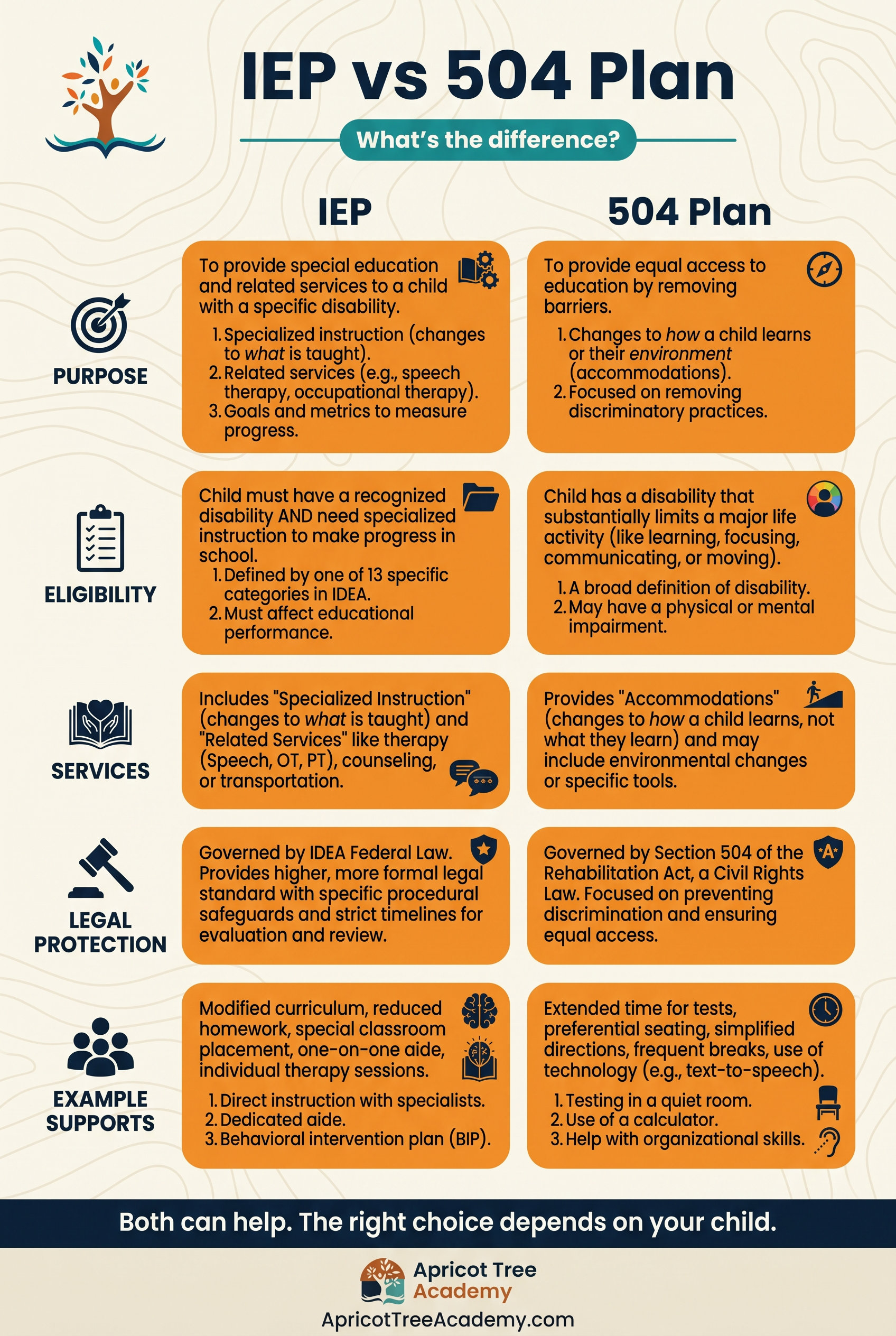
An IEP (Individualized Education Program) is a legal plan that sets specialized instruction and goals for an eligible student, while a 504 plan provides accommodations to give a child equal access to learning. Both are tools for making sure your child gets what they need, and as a parent you are an essential member of the team that creates them.
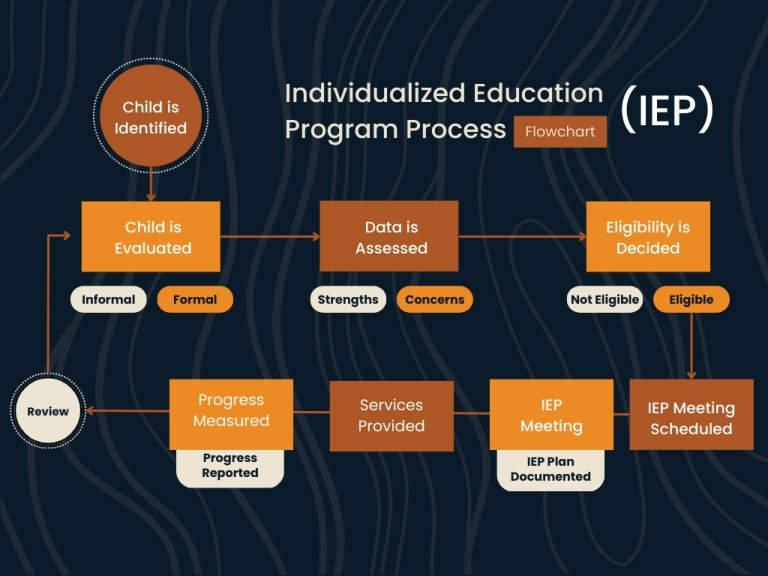
Actively participate in the development and implementation of your child’s IEP or 504 plan, making sure it accurately reflects their specific learning requirements. Advocate for the accommodations that remove barriers without lowering expectations. Common, reasonable accommodations include:
- Additional time on assignments and tests.
- The use of assistive technologies, such as text-to-speech or audiobooks.
- Explicit, systematic reading instruction grounded in structured literacy.
- Reduced copying from the board and alternatives to reading aloud in front of peers.
Collaboration during the IEP process helps set your child up with a beneficial, accurate learning plan. To walk in prepared, see our checklist for how to prep for your IEP meeting, and learn more about your rights as a parent of a dyslexic child so you know what you’re entitled to ask for.
How do I build a personalized intervention plan with the school?
A plan on paper only helps if it translates into the right instruction every day. Work closely with your child’s teachers, school psychologists, and educational specialists to establish a personalized intervention plan that targets the underlying reading difficulty. For a child with dyslexia, the most effective interventions are explicit, systematic, and multisensory—the approach at the heart of the Science of Reading.
- Tailored reading programs that build phonics and decoding skills in a clear sequence.
- Assistive technologies that support reading and writing while skills develop.
- Individualized teaching methods designed to enhance literacy, such as Orton-Gillingham-based instruction.
Stay actively involved in monitoring and adjusting these interventions. Ask how progress is being measured, review the data together, and collaborate with the school to make changes when something isn’t working. If you want to reinforce the same methods at home, our Dyslexia Intervention Curriculum uses a structured-literacy approach—and the companion workbook on Amazon gives you step-by-step lessons to practice with your child.
How do I build a lasting support network?
Regular communication and collaboration with schools help you build a strong support network, ensuring that everyone involved is aligned in their efforts to help your child thrive academically and socially. No single person carries the whole load—teachers, specialists, administrators, and you each play a part, and the child benefits most when those parts fit together.
This holistic approach contributes to a positive and proactive educational experience. When your child sees the adults around them cooperating instead of clashing, school feels safer and more predictable, which protects their confidence and motivation. A well-connected support network encourages your child’s overall development and well-being—not just their reading scores. Keep the lines open, celebrate progress together, and revisit the plan as your child grows.
A few habits make the partnership easier to sustain over the years. Keep a simple folder—paper or digital—with your child’s evaluations, current IEP or 504 plan, meeting notes, and samples of their work, so you can spot patterns and walk into any meeting prepared. Introduce yourself to new teachers at the start of each year and share that same short summary of strengths and challenges, since the people on the team will change even when your child’s needs do not. Ask the school who your main point of contact is, and agree on how you’ll communicate between formal meetings, whether that’s email, a shared log, or a quick note home. Most importantly, bring your child into the conversation as they get older; teaching them to understand their own dyslexia and ask for what they need is one of the most lasting gifts a strong school partnership can produce.
Frequently Asked Questions
Why is collaborating with my child's school important for dyslexia?
Your child spends most of their day at school, so the instruction and support they receive there have a major impact on their reading progress and confidence. When parents and educators communicate openly and work toward the same goals, the child gets consistent, aligned support instead of mixed messages.
What is the difference between an IEP and a 504 plan?
An IEP (Individualized Education Program) is a legal plan that provides specialized instruction and measurable goals for an eligible student. A 504 plan provides accommodations that give a child equal access to the general curriculum. A child with dyslexia may qualify for either, depending on their needs and your school's eligibility criteria.
What accommodations should I ask the school for?
Common, reasonable accommodations include extra time on assignments and tests, access to assistive technology like text-to-speech and audiobooks, explicit structured-literacy reading instruction, reduced copying from the board, and alternatives to reading aloud in front of peers. Tie each request to your child's specific challenges.
How often should I meet with my child's teachers?
Schedule regular check-ins rather than waiting for problems to arise—many parents meet at least once a quarter, plus any required IEP or 504 review meetings. Stay in lighter contact between meetings so you can address concerns and adjust the plan as soon as something isn't working.
What if the school and I disagree about my child's plan?
Stay collaborative and ask to see the progress data behind decisions, then propose specific changes grounded in your child's needs. Knowing your legal rights and coming to meetings prepared helps. If the school still won't provide appropriate support, you can request a formal review and explore your options for advocating further.