

If the school refuses to help your dyslexic learner, put your request for an evaluation in writing, learn your rights under IDEA and Section 504, and start evidence-based support at home right away. A verbal “he’ll catch up” in a meeting carries no legal weight, but a dated written request for an evaluation does—it triggers timelines and a formal response the school cannot simply ignore. This guide walks through the concrete steps, parent to parent, from someone who has sat in those discouraging meetings too.
What are my rights when the school refuses to help?
Public schools in the United States are legally required to identify and appropriately support students with disabilities that affect learning, and dyslexia can qualify. Two federal laws are the foundation of your rights as a parent.
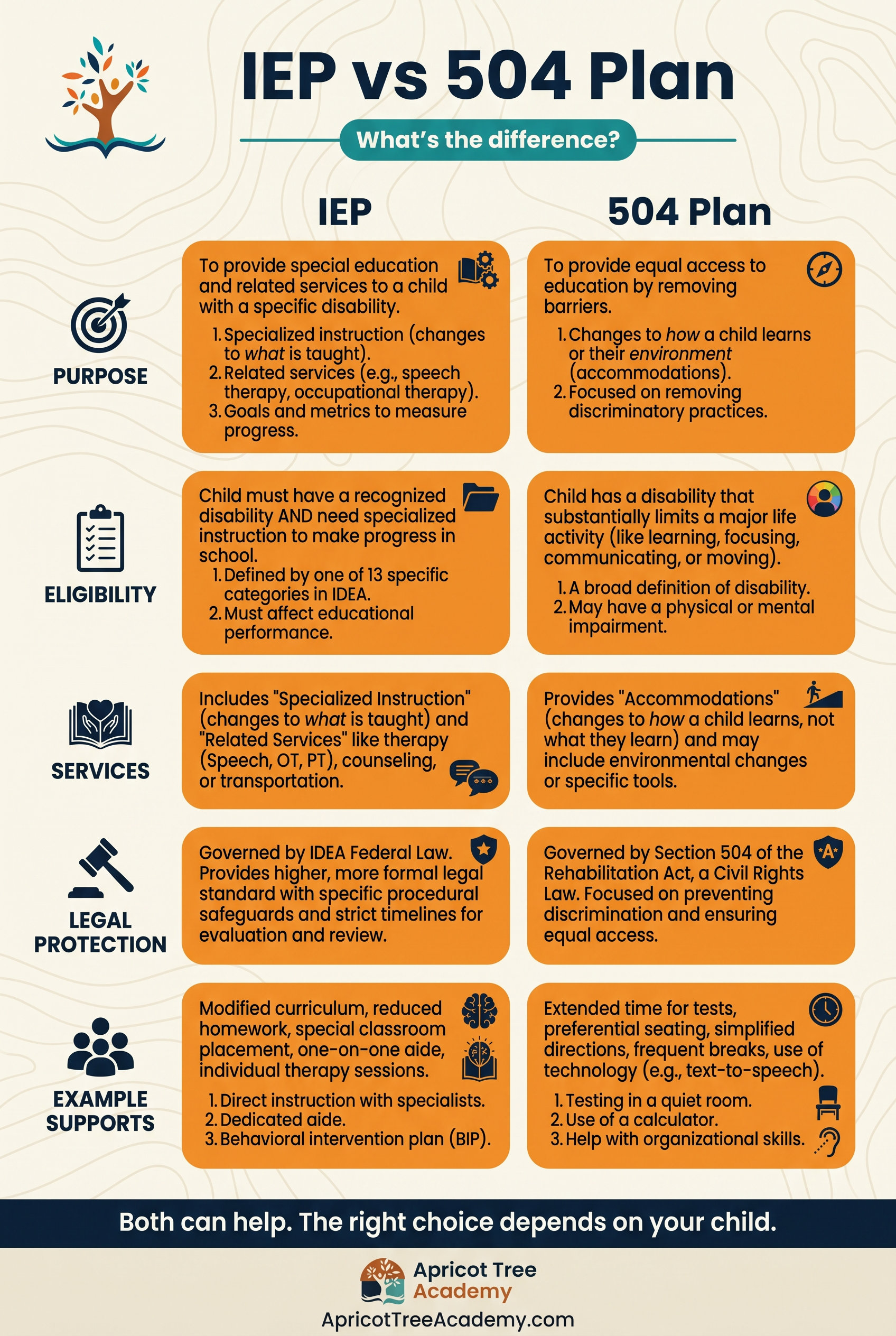
- The Individuals with Disabilities Education Act (IDEA) is the special education law. Under IDEA, a child found eligible is entitled to a free appropriate public education delivered through an Individualized Education Program (IEP). Dyslexia falls under the “specific learning disability” category.
- Section 504 of the Rehabilitation Act is a civil rights law that prohibits disability discrimination. A 504 plan provides accommodations—such as extra time or audiobooks—for a child whose disability substantially limits a major life activity like reading or learning.
IDEA generally provides specialized instruction and services through an IEP, while Section 504 provides accommodations to give equal access. Many states also have their own dyslexia laws and screening requirements, so it is worth learning what your state specifically mandates. When a school staff member tells you informally that your child does not qualify or just needs to “try harder,” that opinion is not a legal decision—eligibility is determined through a formal evaluation process, not a hallway conversation.
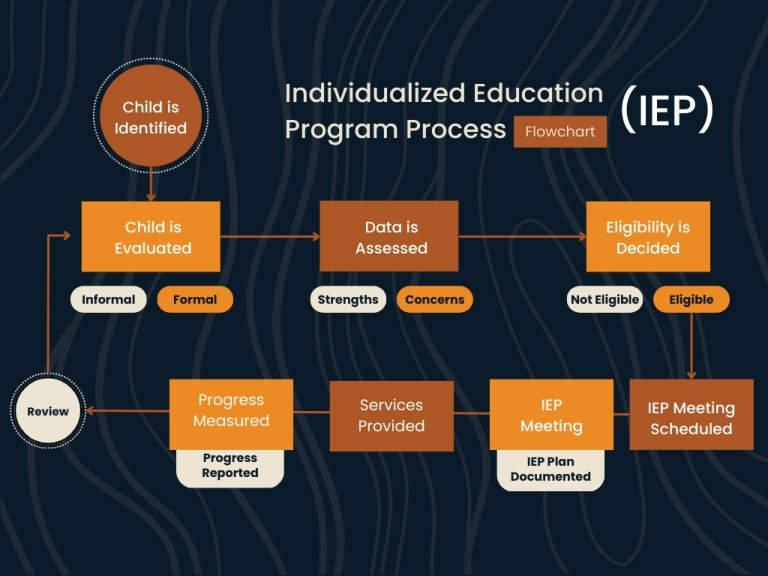
How do I formally request an evaluation?
The single most useful step is to request a special education evaluation in writing, addressed to the school or district, dated, and kept for your records. A written request matters because it starts the formal process and the legal timelines that go with it, rather than leaving things to an open-ended “we’ll keep an eye on it.”
- State clearly what you want. Say you are requesting a full evaluation to determine whether your child has a disability and needs special education services, and mention your specific concerns about reading, spelling, and decoding.
- Send it to the right people. Email or hand-deliver it to the principal, the special education coordinator, or your district’s special education office, and keep a copy.
- Know about Prior Written Notice. Under IDEA, when a school proposes or refuses to evaluate or change services, it generally must give you Prior Written Notice—a written explanation of the decision and the reasons behind it. If the school says no, you can ask for that notice in writing. It creates a paper trail and explains your options.
- Watch the timelines. Once you give consent for an evaluation, federal law sets a timeframe for the school to complete it, and many states set their own specific deadlines. Knowing the timeline helps you hold the school accountable.
Keep every email, letter, meeting note, and sample of your child’s schoolwork in one folder. Documentation is what turns “I feel like my child is struggling” into a record the school has to respond to. If you are heading toward an IEP meeting, our guide on how to prepare for your IEP meeting walks through what to bring and what to ask.
Should I get an independent evaluation?
If the school will not evaluate your child, downplays the severity of the struggle, or completes an evaluation you disagree with, an independent evaluation can be a powerful tool. A private assessment from a licensed educational psychologist or a dyslexia specialist can document exactly where your child is struggling and provide the evidence you need to push for services or accommodations.
- It gives you objective data. A thorough evaluation measures phonological awareness, decoding, fluency, and related skills, which makes the pattern of dyslexia visible rather than debatable.
- It can be requested at public expense in some situations. Under IDEA, if you disagree with the school’s evaluation, you may have the right to request an Independent Educational Evaluation (IEE), and in certain circumstances the district pays for it. Ask the school about their IEE procedures.
- It informs instruction either way. Even if you fund it privately, a good evaluation tells you and any tutor exactly what to target. Our overview of dyslexia testing for parents explains what these assessments look at.
How can I support my child at home right now?
Advocacy can take weeks or months, but your child needs support today. The good news is that you can begin building reading skills and protecting confidence at home while the school process plays out. The most effective approaches use structured literacy—explicit, systematic, multisensory instruction aligned with the Science of Reading, such as Orton-Gillingham-based methods.
- Audiobooks and text-to-speech tools. These let your child reach grade-level stories and content without the exhaustion of decoding every word, keeping their love of learning alive.
- Multisensory practice. Hands-on, movement-based activities and visual aids reinforce reading and spelling by engaging more than one sense at a time—a core principle of Orton-Gillingham.
- A structured intervention you can run at home. A scripted, step-by-step program removes the guesswork for parents with no teaching background. Our Dyslexia Intervention Curriculum and the companion workbook on Amazon are designed exactly for this.
- Build on strengths. Dyslexic learners often excel in problem-solving, creativity, and big-picture thinking. Give your child regular chances to shine in the areas they love so reading struggles do not define how they see themselves. Our article on the strengths of dyslexia offers ideas.
Where do I find support and outside help?
Fighting for your child can feel isolating, but you are part of a large community of parents who have walked this road. Outside help comes in two forms—people and services—and both matter.
- Parent support communities. Local and online dyslexia groups and parent advocacy networks share scripts, sample letters, and emotional support. Other parents often know your state’s process better than anyone.
- Private tutoring and intervention programs. If the school will not act, you do not have to wait. A trained Orton-Gillingham tutor or a structured literacy program can begin closing the gap immediately.
- Assistive technology. Tools like text-to-speech, speech-to-text, and reading apps reduce frustration and let your child keep up with grade-level material.
You can also keep working with the school even when it is hard. Our guide to collaborating with schools covers how to stay firm and constructive at the same time.
When should I consider other schooling options?
If your child is in a setting with little or no support and the struggle is harming their confidence and well-being, it is reasonable to explore alternatives. This is not giving up—it is matching the environment to your child.
- Homeschooling lets you deliver a structured literacy program at your child’s pace, with no decoding-by-fire in front of peers.
- Specialized private schools built for learning differences provide trained staff and methods designed for dyslexic learners.
- Microschools and small learning pods offer smaller groups and more individualized attention than a large classroom.
Whatever path you choose, your child’s potential is not capped by a single school’s response. With the right support and consistent, structured instruction, dyslexic children learn to read and thrive. You are your child’s best advocate—and that has always been enough to change the story.
Frequently Asked Questions
Can a public school legally refuse to evaluate my child for dyslexia?
A school cannot simply ignore a request. Under IDEA, if a school declines to evaluate, it generally must give you Prior Written Notice explaining the decision in writing. You can then pursue options such as requesting that notice, filing a complaint, or seeking an independent evaluation. Always make your evaluation request in writing and keep a dated copy.
What is the difference between an IEP and a 504 plan?
An IEP is created under IDEA and provides specialized instruction and services for a child found eligible for special education. A 504 plan, under Section 504 of the Rehabilitation Act, provides accommodations like extra time or audiobooks so a child with a disability has equal access. IEPs are generally more comprehensive; 504 plans focus on accommodations.
How do I request a dyslexia evaluation from the school?
Send a written, dated request to the principal or your district's special education office asking for a full evaluation to determine whether your child needs special education services. Name your specific concerns about reading and spelling, and keep a copy. The written request matters because it starts the formal process and the legal timelines.
What is Prior Written Notice and why does it matter?
Prior Written Notice is a written explanation the school must generally provide under IDEA when it proposes or refuses to evaluate your child or change services. It documents the school's decision and the reasons behind it, creating a paper trail and helping you understand your options if the school says no.
What can I do at home while I fight for support at school?
Begin structured literacy support right away using explicit, multisensory, Orton-Gillingham-based instruction. Add audiobooks and text-to-speech so your child can access grade-level content, practice with hands-on multisensory activities, and give them chances to use their strengths. A scripted home intervention program makes this manageable even with no teaching background.