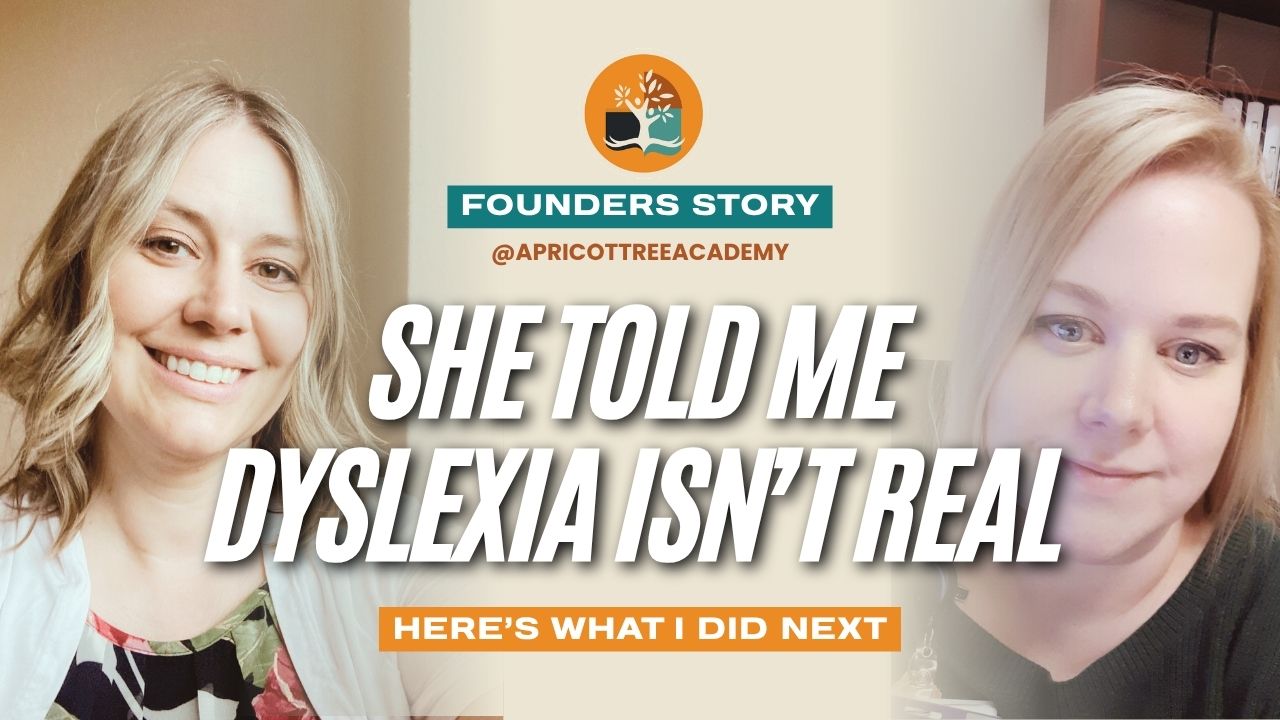
Our Story: The School Psychologist Told Me Dyslexia Wasn't Real
The founders of Apricot Tree Academy on why they built a dyslexia curriculum parents can teach at home.
Watch & read >
Practical, parent-focused guidance on dyslexia, structured literacy, and helping your child learn to read, from the team at Apricot Tree Academy.
The founders of Apricot Tree Academy on why they built a dyslexia curriculum parents can teach at home.
Watch & read >
A parent advocate and academic language therapist on Section 504, the Child Find mandate, and how families win services at school.
Watch & read >
From confused parent to co-founder of the Texas Dyslexia Coalition and school board member: the fight behind HB 3928.
Watch & read >
An occupational therapist and author on her anime-style graphic novel and the best first steps for newly diagnosed families.
Watch & read >
Dyslexia usually affects reading the math, not the math. How to support word problems, math facts, and when to suspect dyscalculia.
Read more >
The signs of evidence-aligned reading instruction, the red flags of three-cueing, and the questions to ask your school this fall.
Read more >
The meltdown isn’t defiance. It’s an exhausted brain. Homework accommodations to request and an evening routine that lowers the temperature.
Read more >
The accommodations that matter most for ages 5–10, organized by type, and why they need to be in writing to be enforceable.
Read more >
Start the year as allies. What to share in week one, how to follow up when accommodations drift, with a complete sample letter.
Read more >
What you can teach yourself, what belongs to a specialist, and 5 signs it's time to bring in help.
Read article >
Six steps to homeschooling a dyslexic child, from choosing a reading program to a routine that sticks.
Read article >
The 7 features that matter in a dyslexia home curriculum, and the 5 red flags to avoid before you buy.
Read article >
A ready-to-use daily and weekly plan built around a 30–60 minute reading block. Copy and adjust.
Read article >
The trade-offs, the questions to ask, and the hybrid options between homeschool and public school.
Read article >
Reversals are normal through about age 7. Dyslexia is not “seeing backwards.” When to pay attention, and multisensory fixes for b/d.
Read more >
Flashcard drilling by shape fails dyslexic kids. How orthographic mapping really works, and the heart-words routine that sticks.
Read more >
What the evidence says about special fonts, spacing, text-to-speech, and audiobooks: which tools accommodate, and what actually remediates.
Read more >
Henry Winkler, Whoopi Goldberg, Octavia Spencer and more: the honest lessons in their stories, and how to share them with your child.
Read more >
A 30–60 minute daily structure that survives camp weeks, travel days, and July motivation dips, with a weekly rhythm you can actually keep.
Read more >
Just got a dyslexia diagnosis? Here are the first 7 steps every parent should take in the first 30 days.
Read article >
Orton-Gillingham is the gold-standard approach for teaching dyslexic readers. How parents can use it at home.
Read article >
A clear, age-by-age guide to the signs of dyslexia in children 5–10 (kindergarten through 4th grade).
Read article >
What to look for in a dyslexia curriculum designed for parents, and the questions to ask before you buy.
Read article >
A practical step-by-step guide for parents teaching a dyslexic child to read at home.
Read article >
How to tell them apart, why it matters for intervention, and what to do in each case.
Read article >
An honest comparison of professional tutoring and parent-led structured literacy: costs, availability, results, and a decision checklist.
Read more >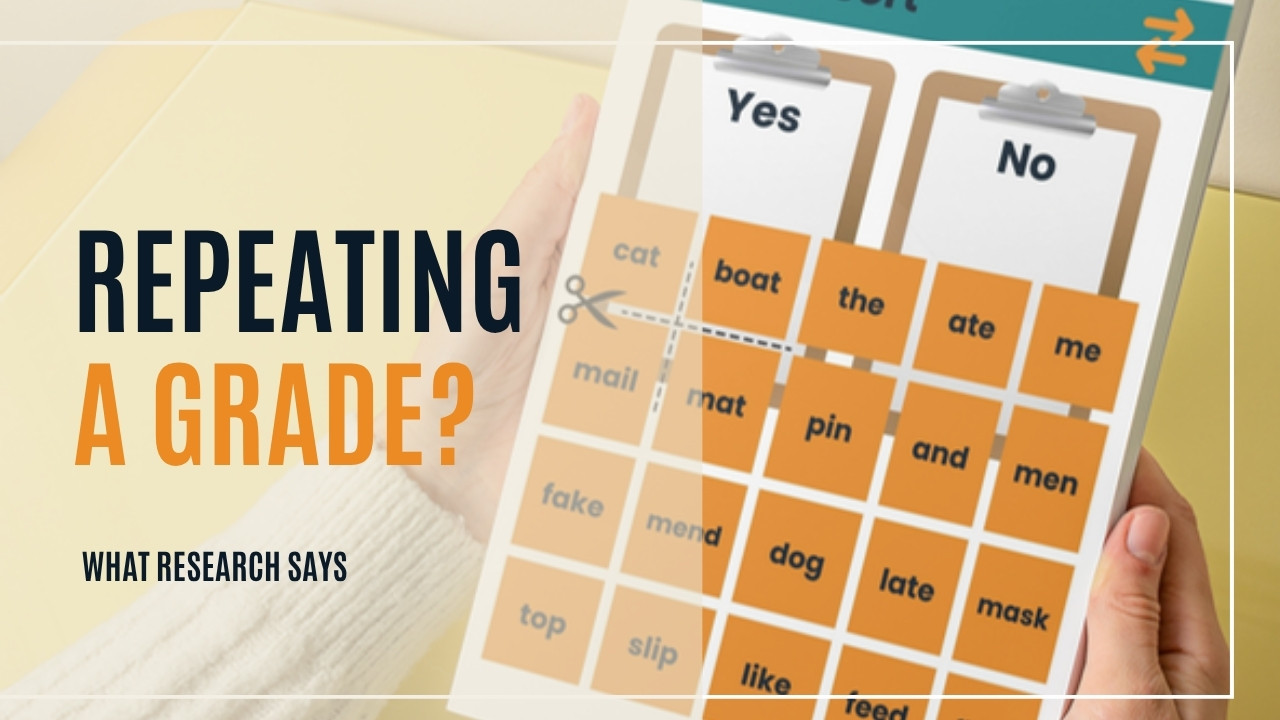
Retention alone doesn’t fix reading. What the research shows, the question to ask instead, and what to request before agreeing to anything.
Read more >
Percentiles, grade equivalents, benchmark bands: a plain-English decoder for the end-of-year report, and the questions to ask before summer.
Read more >
Read-aloud picks by age (including stories with dyslexic heroes) and why reading to your child matters more, not less, when reading is hard.
Read more >
The summer slide hits struggling readers hardest. A practical plan to protect the skills your child worked all year to build.
Read more >
Your child’s ideas outrun their pencil. Why writing is doubly hard with dyslexia, and how scribing, oral rehearsal, and dictation help.
Read more >
30–60 minutes of structured practice a day: here’s why that’s the target, how to split it up, and a daily rhythm that families can keep.
Read more >
The approach behind every effective dyslexia program, explained without jargon: what it covers, how it’s taught, and what it looks like at home.
Read more >
Months, not weeks. What progress looks like at 3 months, 6 months, and a year of structured literacy, and when to reassess.
Read more >
No, and that’s not bad news. What intervention really changes in the brain, what “remediated” looks like, and the cure claims to avoid.
Read more >
Spelling lags behind reading for dyslexic kids, and Friday word lists don’t fix it. What does: explicit, multisensory, pattern-based instruction.
Read more >
Why predictable leveled books train guessing, how decodable text builds real reading, and how to tell which kind your child brings home.
Read more >
A side-by-side comparison of IEPs and 504 plans: what each provides, who qualifies, and how to decide which fits your child’s situation.
Read more >
Age-by-age guidance on screening and formal evaluation, how to request testing in writing, and why “wait and see” is never the right answer.
Read more >
Dyslexia runs in families, strongly. What the genetics research means for your child, and why family history is a reason to screen early, not wait.
Read more >
A parent-focused guide on use schema to boost reading comprehension. What it means, why it matters, and how families can use it at home.
Read article >
A parent-focused guide on free resources for parents at apricot tree academy. What it means, why it matters, and how families can use it at home.
Read article >
A parent-focused guide on fluent reading: what is it and why is it important?. What it means, why it matters, and how families can use it at home.
Read article >
A parent-focused guide on using text-to-speech: a powerful tool for struggling readers. What it means, why it matters, and how families can use it at home.
Read article >
A parent-focused guide on the reading wars: a history of how we teach kids to read. What it means, why it matters, and how families can use it at home.
Read article >
A parent-focused guide on unlocking stories: the benefits of audiobooks for dyslexia. What it means, why it matters, and how families can use it at home.
Read article >
A parent-focused guide on 5 essential components of literacy: building strong readers. What it means, why it matters, and how families can use it at home.
Read article >
A parent-focused guide on online resources for dyslexic children. What it means, why it matters, and how families can use it at home.
Read article >
A parent-focused guide on vocabulary: building background knowledge. What it means, why it matters, and how families can use it at home.
Read article >
A parent-focused guide on defining dyslexia. What it means, why it matters, and how families can use it at home.
Read article >
A parent-focused guide on the reading and writing connection. What it means, why it matters, and how families can use it at home.
Read article >
A parent-focused guide on dyslexia q&a. What it means, why it matters, and how families can use it at home.
Read article >
A parent-focused guide on phonemic awareness: how and why?. What it means, why it matters, and how families can use it at home.
Read article >
A parent-focused guide on using assessment to guide instruction for dyslexic learners. What it means, why it matters, and how families can use it at home.
Read article >
A parent-focused guide on strengths of dyslexia: seeing brilliance through a different lens. What it means, why it matters, and how families can use it at home.
Read article >
A parent-focused guide on fluency: tips and tricks for growing confident readers. What it means, why it matters, and how families can use it at home.
Read article >
A parent-focused guide on the power of morphology: enhancing reading and writing skills. What it means, why it matters, and how families can use it at home.
Read article >
A parent-focused guide on inside our dyslexia intervention program: effective support. What it means, why it matters, and how families can use it at home.
Read article >
A parent-focused guide on improving adolescent literacy. What it means, why it matters, and how families can use it at home.
Read article >
A parent-focused guide on adhd and dyslexia. What it means, why it matters, and how families can use it at home.
Read article >
A parent-focused guide on comprehension strategies. What it means, why it matters, and how families can use it at home.
Read article >
A parent-focused guide on the 7 syllable types and how they help dyslexic readers. What it means, why it matters, and how families can use it at home.
Read article >
A parent-focused guide on when the school refuses help: supporting your dyslexic learner. What it means, why it matters, and how families can use it at home.
Read article >
A parent-focused guide on common misconceptions about dyslexia: breaking the myths. What it means, why it matters, and how families can use it at home.
Read article >
A parent-focused guide on prep for your iep meeting. What it means, why it matters, and how families can use it at home.
Read article >
A parent-focused guide on empowering dyslexic learners through assistive technology. What it means, why it matters, and how families can use it at home.
Read article >
A parent-focused guide on support at home. What it means, why it matters, and how families can use it at home.
Read article >
A parent-focused guide on cultivate positivity. What it means, why it matters, and how families can use it at home.
Read article >
A parent-focused guide on understanding your rights as a parent of a dyslexic child. What it means, why it matters, and how families can use it at home.
Read article >
A parent-focused guide on collaboration with schools to support your dyslexic child. What it means, why it matters, and how families can use it at home.
Read article >
A parent-focused guide on early intervention: the key to reading success. What it means, why it matters, and how families can use it at home.
Read article >
A parent-focused guide on a little about dyslexia. What it means, why it matters, and how families can use it at home.
Read article >
A parent-focused guide on creating a flexible schedule. What it means, why it matters, and how families can use it at home.
Read article >
A parent-focused guide on apricot tree academy’s dyslexia intervention program. What it means, why it matters, and how families can use it at home.
Read article >
A parent-focused guide on tips for supporting neurodivergent learners. What it means, why it matters, and how families can use it at home.
Read article >
A parent-focused guide on talking about dyslexia with your child. What it means, why it matters, and how families can use it at home.
Read article >
A parent-focused guide on handwriting instruction: beneficial for all learners. What it means, why it matters, and how families can use it at home.
Read article >
A parent-focused guide on dyslexia and self-esteem: nurturing confidence and overcoming challenges. What it means, why it matters, and how families can use it at home.
Read article >
A parent-focused guide on the power of multisensory activities for enhanced learning. What it means, why it matters, and how families can use it at home.
Read article >
A parent-focused guide on the science of reading: why it matters today. What it means, why it matters, and how families can use it at home.
Read article >
A parent-focused guide on empowering parents: establishing a resilient support community. What it means, why it matters, and how families can use it at home.
Read article >
A parent-focused guide on finding balance in your dyslexia child’s learning journey. What it means, why it matters, and how families can use it at home.
Read article >
A parent-focused guide on early signs and steps towards diagnosing dyslexia. What it means, why it matters, and how families can use it at home.
Read article >
A parent-focused guide on the umbrella of phonological awareness: building the foundation for reading success. What it means, why it matters, and how families can use it at home.
Read article >
A parent-focused guide on dyslexia testing: a guide for parents. What it means, why it matters, and how families can use it at home.
Read article >
A parent-focused guide on what i learned as a parent of children with dyslexia. What it means, why it matters, and how families can use it at home.
Read article >
A parent-focused guide on creating a learning environment for neurodiversity. What it means, why it matters, and how families can use it at home.
Read article >
A parent-focused guide on books for kids with dyslexia. What it means, why it matters, and how families can use it at home.
Read article >
A parent-focused guide on dyslexia books for parents. What it means, why it matters, and how families can use it at home.
Read article >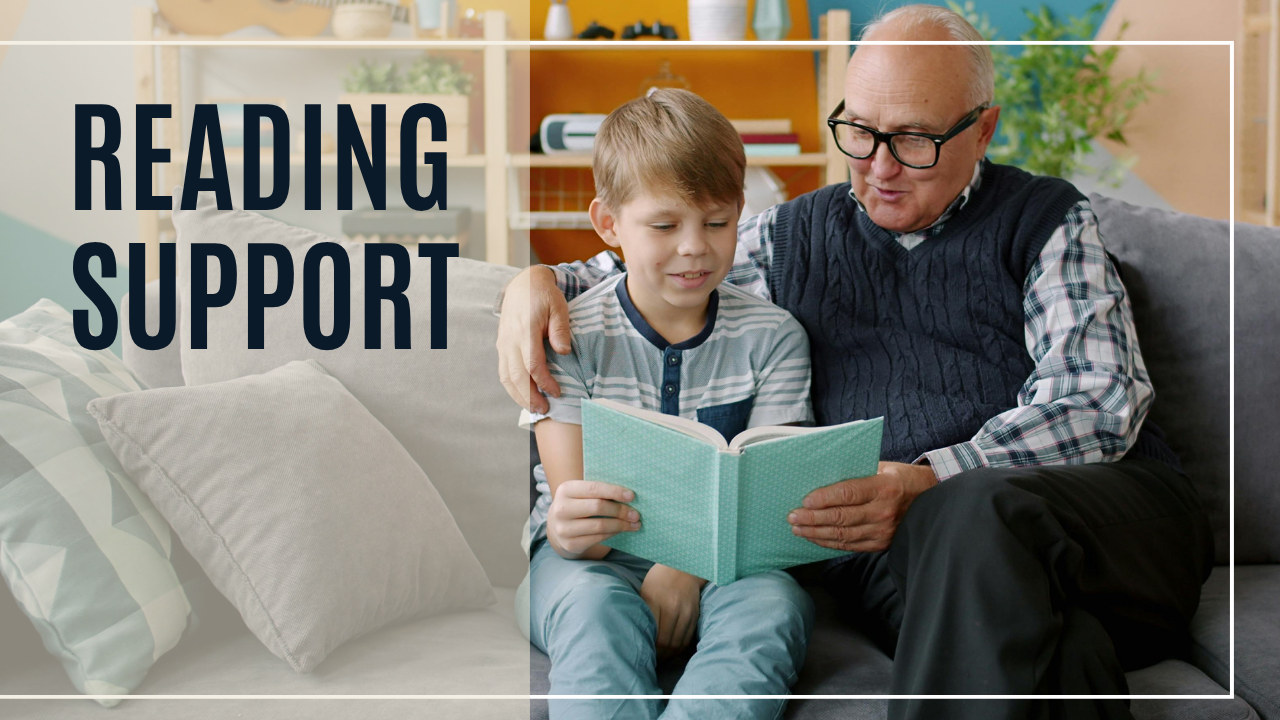
A parent-focused guide on reading support. What it means, why it matters, and how families can use it at home.
Read article >
A University of Houston review of four decades of genetics research finds dyslexia reflects a broader brain-network vulnerability, not a single faulty “reading gene.” Here’s what it means for your child.
Read article >
Most reading reform laws stop at 3rd grade, leaving older struggling readers without support. Here’s what the news means for your child, and why it is never too late to learn to read.
Read article >
More than 40 U.S. states now have dyslexia laws. Colorado’s new universal screening rule and Georgia’s ban on three-cueing show where reading instruction is headed, and what you can do now.
Read article >
A 2025 Stanford study in Nature Communications scanned dyslexic and typical readers up to five times in one year. Reading intervention grew the brain's word-recognition area and improved reading, but the underlying difference persisted. Here’s what that means for your child.
Read article >
In October 2025 the IDA revised its dyslexia definition, dropping the IQ-gap model so kids get help sooner, regardless of intelligence.
Read article >
A new study of 1.2 million people found dyslexia is highly genetic and brain-based, not laziness. Here’s what it means for parents.
Read article >
The 2024 NAEP results show U.S. reading scores fell again, with 40% of 4th graders below “Basic.” Here’s what it means for your child.
Read article >
At WWDC 2025, Apple named the text-to-speech app Speechify a winner of its Apple Design Awards for inclusivity. Here’s what AI reading tools can and cannot do for a child with dyslexia.
Read article >
A parent-focused review of Knees: what works in the book, what to watch for, and whether it earns a place on your shelf.
Read article >
A parent-focused review of The Dyslexia Empowerment: what works in the book, what to watch for, and whether it earns a place on your shelf.
Read article >
A parent-focused review of Here’s Hank: what works in the book, what to watch for, and whether it earns a place on your shelf.
Read article >
A parent-focused review of The Dyslexic Advantage: what works in the book, what to watch for, and whether it earns a place on your shelf.
Read article >
A parent-focused review of Thank You, Mr. Falker: what works in the book, what to watch for, and whether it earns a place on your shelf.
Read article >
A parent-focused review of Language at the Speed of Sight: what works in the book, what to watch for, and whether it earns a place on your shelf.
Read article >
A parent-focused review of Hank Zipzer: Niagara Falls, or Does It? What works in the book, what to watch for, and whether it earns a place on your shelf.
Read article >
A parent-focused review of Being Henry: what works in the book, what to watch for, and whether it earns a place on your shelf.
Read article >
A parent-focused review of Hacking the Code: what works in the book, what to watch for, and whether it earns a place on your shelf.
Read article >
A parent-focused review of Discovering My Dyslexia Superpowers: what works in the book, what to watch for, and whether it earns a place on your shelf.
Read article >
A parent-focused review of Reading in the Brain: what works in the book, what to watch for, and whether it earns a place on your shelf.
Read article >
A parent-focused review of Did You Say Pasghetti? What works in the book, what to watch for, and whether it earns a place on your shelf.
Read article >
A parent-focused review of One in Five: what works in the book, what to watch for, and whether it earns a place on your shelf.
Read article >
A parent-focused review of My Name is Brain Brian by Jeanne Betancourt: what works in the book, what to watch for, and whether it earns a place on your shelf.
Read article >
A parent-focused review of Overcoming Dyslexia by Sally Shaywitz, M.D: what works in the book, what to watch for, and whether it earns a place on your shelf.
Read article >
A real family using the Apricot Tree Academy approach. What they tried, what worked, and what changed for their child.
Read article >
A real family using the Apricot Tree Academy approach. What they tried, what worked, and what changed for their child.
Read article >
A real family using the Apricot Tree Academy approach. What they tried, what worked, and what changed for their child.
Read article >
A real family using the Apricot Tree Academy approach. What they tried, what worked, and what changed for their child.
Read article >
News and updates from Apricot Tree Academy on programs, materials, and community initiatives.
Read article >
News and updates from Apricot Tree Academy on programs, materials, and community initiatives.
Read article >
News and updates from Apricot Tree Academy on programs, materials, and community initiatives.
Read article >